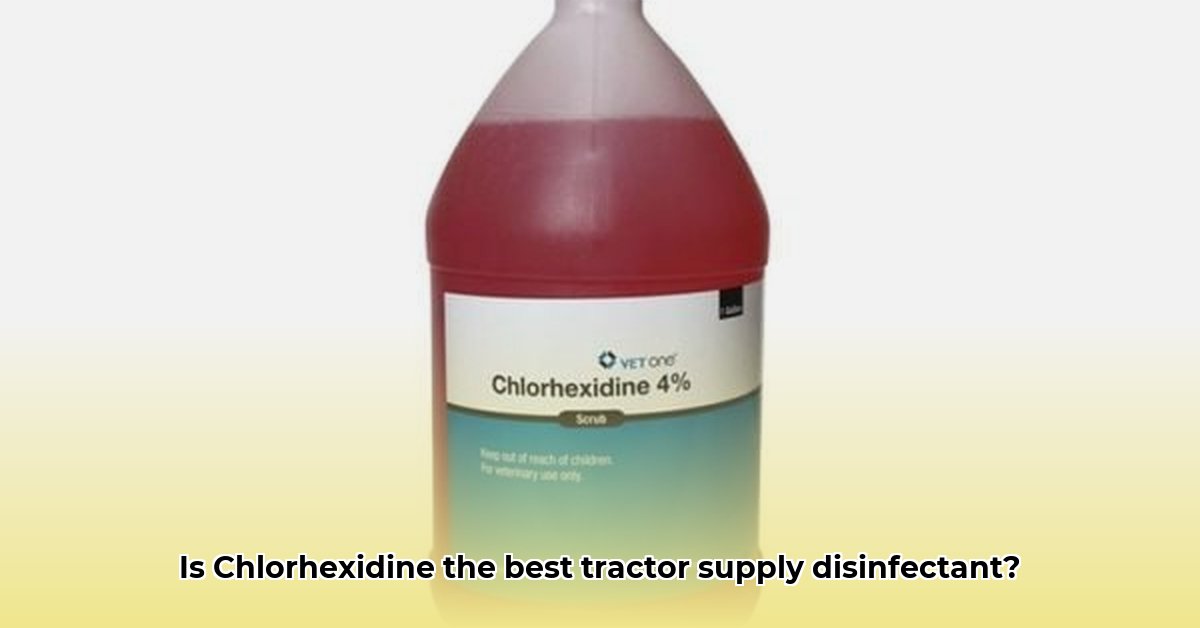
Choosing the right disinfectant for your animals is crucial for maintaining their health. This comparative analysis focuses on two chlorhexidine products available at Tractor Supply: VetOne Chlorhexidine Disinfectant and Stratford Chlorhexidine 4 Shampoo. We will compare their features, efficacy, and usage to help you make an informed decision. Understanding the nuances of chlorhexidine concentration and application is key to effective and safe use. For parasite control, consider additional options.
Understanding Chlorhexidine: A Broad-Spectrum Antiseptic
Chlorhexidine gluconate (CHG) is a powerful antiseptic effective against a wide range of Gram-positive and Gram-negative bacteria, as well as certain fungi. Its effectiveness, however, is heavily reliant on concentration and method of application. Higher concentrations generally equate to greater antimicrobial activity, but also increase the potential for skin irritation. Therefore, understanding the product's concentration and following dilution instructions precisely are critical.
VetOne Chlorhexidine Disinfectant: A Defined Formulation
VetOne Chlorhexidine Disinfectant, readily available at Tractor Supply, is a 2% chlorhexidine gluconate solution. This means it contains 2 grams of CHG per 100 milliliters of solution. The label typically recommends dilution—usually one ounce per gallon of water—for topical application. Precise measurement is crucial for consistent results and to avoid potential skin irritation from over-concentration.
Stratford Chlorhexidine 4 Shampoo: Limited Information Available
Stratford Chlorhexidine 4 Shampoo, also sold at Tractor Supply, presents a challenge for direct comparison. The product information lacks explicit details regarding the precise concentration of chlorhexidine gluconate. This absence of crucial data prevents a definitive comparison of its antimicrobial potency with VetOne. Further research is needed to assess its efficacy and optimal application methods.
Head-to-Head Comparison: VetOne vs. Stratford
The following table outlines a direct comparison of the two products based on available information:
| Feature | VetOne Chlorhexidine Disinfectant | Stratford Chlorhexidine 4 Shampoo |
|---|---|---|
| Active Ingredient | 2% Chlorhexidine Gluconate | Chlorhexidine Gluconate (Concentration Unspecified) |
| Formulation | Liquid Solution | Shampoo |
| Recommended Dilution | 1 oz per gallon water | Not clearly specified |
| Typical Application Method | Topical (diluted) | Topical (undiluted, likely) |
| Label Clarity | Clear and detailed | Lacks detail on concentration |
| Availability at Tractor Supply | Yes | Yes |
Choosing the Right Product: A Practical Guide
The best choice depends on your specific needs and comfort level with the available information. VetOne's clearly defined concentration and application instructions allow for more predictable results. However, its liquid form may be less convenient for certain applications. Stratford's shampoo format offers potential convenience but lacks the transparency needed for confident comparison. The uncertainty surrounding its concentration makes predicting efficacy difficult.
Actionable Steps for Safe and Effective Use
Follow these steps to maximize efficacy and minimize risks:
Veterinary Consultation: Consult your veterinarian before using any new disinfectant on your animals. They can assess your animal's health and recommend the most appropriate product and application method. This step is crucial for both treatment success and animal safety.
Meticulous Label Adherence: Always read and strictly adhere to all label instructions. Proper dilution is essential for both effectiveness and to prevent skin irritation or other adverse reactions.
Close Animal Monitoring: Observe your animal carefully after application. Report any adverse reactions such as redness, swelling, or behavioral changes to your veterinarian immediately.
Detailed Record Keeping: Maintain a record of product use, including dates, amounts used, and any observed effects. This careful record-keeping is essential for future reference and for collaborating with your veterinarian.
The Verdict: The Importance of Transparency
While both VetOne and Stratford offer chlorhexidine disinfectants, the lack of complete information about Stratford's formulation hampers a thorough comparison. Prioritizing products with complete and transparent labeling is paramount when choosing veterinary disinfectants. Remember, your veterinarian remains your most reliable resource for making informed decisions about your animal's healthcare.
How to Compare VetOne and Stratford Chlorhexidine for Efficacy: A Deeper Dive
This section focuses on a more detailed comparative analysis of VetOne and Stratford chlorhexidine disinfectants, emphasizing practical considerations and best practices.
Key Factors for Efficacy Comparison
Direct comparison requires careful examination of label information including:
Chlorhexidine Gluconate Concentration: This is the most critical factor determining antimicrobial power. Higher concentrations are generally more effective but carry a greater risk of irritation. Direct comparison of percentage strengths is essential.
Intended Uses: Labels indicate the intended applications (e.g., wound care, skin infections). The effectiveness of a given concentration may vary depending on the specific use. It is vital to select products with appropriate intended uses.
Dilution Instructions: Incorrect dilution can significantly reduce efficacy or even cause harm. Carefully compare and adhere to specific dilution ratios.
User Feedback: Although subjective, user reviews can provide valuable insights into real-world experiences. Look for consistent patterns and trends.
Practical Considerations for Selection
Practical factors influence your choice:
Cost-Effectiveness: Compare prices per unit volume to determine the most economically viable option.
Product Availability: Consider the availability of each product at your local Tractor Supply or other retailers.
Pet's Skin Sensitivity: For pets with sensitive skin, a lower concentration is advisable. Always perform a patch test before widespread application.
Important Cautions
Remember that chlorhexidine is not a panacea. Factors like the specific infection, the animal's overall health, and other treatments influence results. Veterinary guidance is indispensable, especially for severe conditions. Always consult your veterinarian for diagnosis and treatment plan.
Pivotal Points:
- Concentration is Key: The percentage of chlorhexidine gluconate directly impacts efficacy and potential irritation.
- Label Accuracy is Crucial: Always adhere closely to label directions for dilution and application.
- Veterinary Oversight is Essential: Consult your veterinarian before using any disinfectant, particularly for serious conditions.